
The Pest Control Contract Renews Itself
The free inspection is not the product. The annual agreement is, and the clause that makes it worth paying for is not the quarterly visit everyone thinks they are buying.

It Started With a Line of Ants by the Dishwasher
Second summer in the house. A thin, purposeful line of ants running from a gap under the dishwasher toward a crumb situation nobody was admitting to. I did the vinegar thing. They came back. I did the cinnamon thing my aunt swears by, which accomplished nothing except making the kitchen smell like a candle store.
So I called someone. A very nice man named Rob arrived within two days, walked the perimeter, found a mulch bed piled above the siding line (my fault), and quoted me $89 for the initial treatment. Which felt reasonable. Which is exactly how it is supposed to feel.
What I signed that afternoon was not an $89 treatment. It was a twelve-month agreement with quarterly service at $124 a visit, auto-renewing, with a cancellation window I would not read until the following spring.
The Contract Is the Product
Once you see the model you cannot unsee it. The initial treatment is priced as a customer acquisition cost, sometimes discounted to nearly nothing, occasionally free. The money is in the recurring agreement behind it.
Standard structure across the big national providers and most regional ones:
- Initial service at $79 to $199, heavily discounted from a "regular" price you will never be charged.
- Quarterly or bi-monthly maintenance at $80 to $150 per visit, billed on a schedule.
- An annual term that renews automatically unless you cancel in writing, often 30 days before the anniversary.
- An early termination provision that in many agreements claws back the discount you got on the initial service.
That last one is the piece that surprises people. Cancel in month four and you may owe the difference between the $89 you paid and the $249 the initial treatment "really" cost. It is in there. It is usually one sentence.
None of this is a scam. Recurring revenue is how the technician who knows your crawl space stays employed. But you should know you are buying a subscription, not a visit, and the national brands differ more on contract terms than on chemistry, which is really what Terminix vs. Orkin and Aptive vs. Terminix come down to once you get past the sales script.
The Clause That Is Actually Worth the Money
Here is what I did not understand at the time, and what changed how I think about the whole category.
The quarterly visit is not really the product either. The product is the free re-service clause: if pests come back between scheduled visits, they return at no charge, as many times as needed.
That clause is why the contract exists in a form worth signing. A perimeter treatment is not magic and it does not always take on the first pass. Without re-service, a treatment that fails is money gone. With it, you have someone on the hook until the problem stops.
So when you compare providers, compare that clause. How fast do they commit to coming back? Is it unlimited or capped at a number of callbacks? Does it cover the specific pest you have or only the ones named in a schedule? A company with a slightly higher quarterly rate and an unconditional re-service commitment is the better deal, every time, and it is not close.
What a Termite Bond Actually Promises
Termites are their own contract, separate from general pest service, and this is where the money gets serious. Understand which of the two you are being offered, because they are sold with nearly identical enthusiasm.
- A retreatment bond means that if termites come back, the company treats again at no cost. That is all it means. If the termites have been quietly eating a floor joist for two years, the repair is yours.
- A repair bond covers retreatment plus damage repair, usually up to a stated dollar cap, and typically requires that the company has serviced the property continuously since the original treatment.
Renewal on either runs roughly $150 to $400 a year. The repair version costs more and is worth it in any region where subterranean termites are endemic, which is most of the South and a good deal further north than people assume.
Read the cap. Read the exclusions, which frequently carve out anything involving moisture damage, since termites and water damage travel together and the distinction between them is conveniently ambiguous. And keep the paperwork, because a transferable bond is a genuine asset when you sell. Many lenders and all VA loans require a wood destroying insect report, and handing a buyer an active bond removes a negotiation they would otherwise have used on you.
What Quarterly Service Buys You in January
I live where it snows. For a while I paid for a January visit in which a technician sprayed a foundation perimeter that was under four inches of snow, which even he seemed a little sheepish about.
Seasonality matters and almost nobody adjusts for it. In the upper Midwest and Northeast, meaningful pest pressure runs roughly April through October. A quarterly plan is charging you for a winter service that is, at best, an inspection. In Florida, Texas, and the Gulf states, bi-monthly is genuinely defensible, because nothing ever stops.
Ask for a seasonal schedule. Three visits, spring through fall, at the same per-visit rate. Plenty of regional companies will do this and simply do not offer it unless asked. That regional flexibility is a real advantage the national franchises are slower to match, and it shows up in Massey vs. Orkin and HomeTeam vs. Terminix more than any difference in what is in the tank.
One more thing about the national brands: Orkin and Terminix are heavily franchised. Your experience is your local branch's experience, and a five-star national review average tells you approximately nothing about the truck that will pull into your driveway. Ask who owns the branch. Ask how long your technician has been there. Turnover in this industry is high, and a technician who has walked your crawl space four times is worth more than any brand.
What We Handle Ourselves
We still have a contract. We also stopped calling for things that do not need a professional.
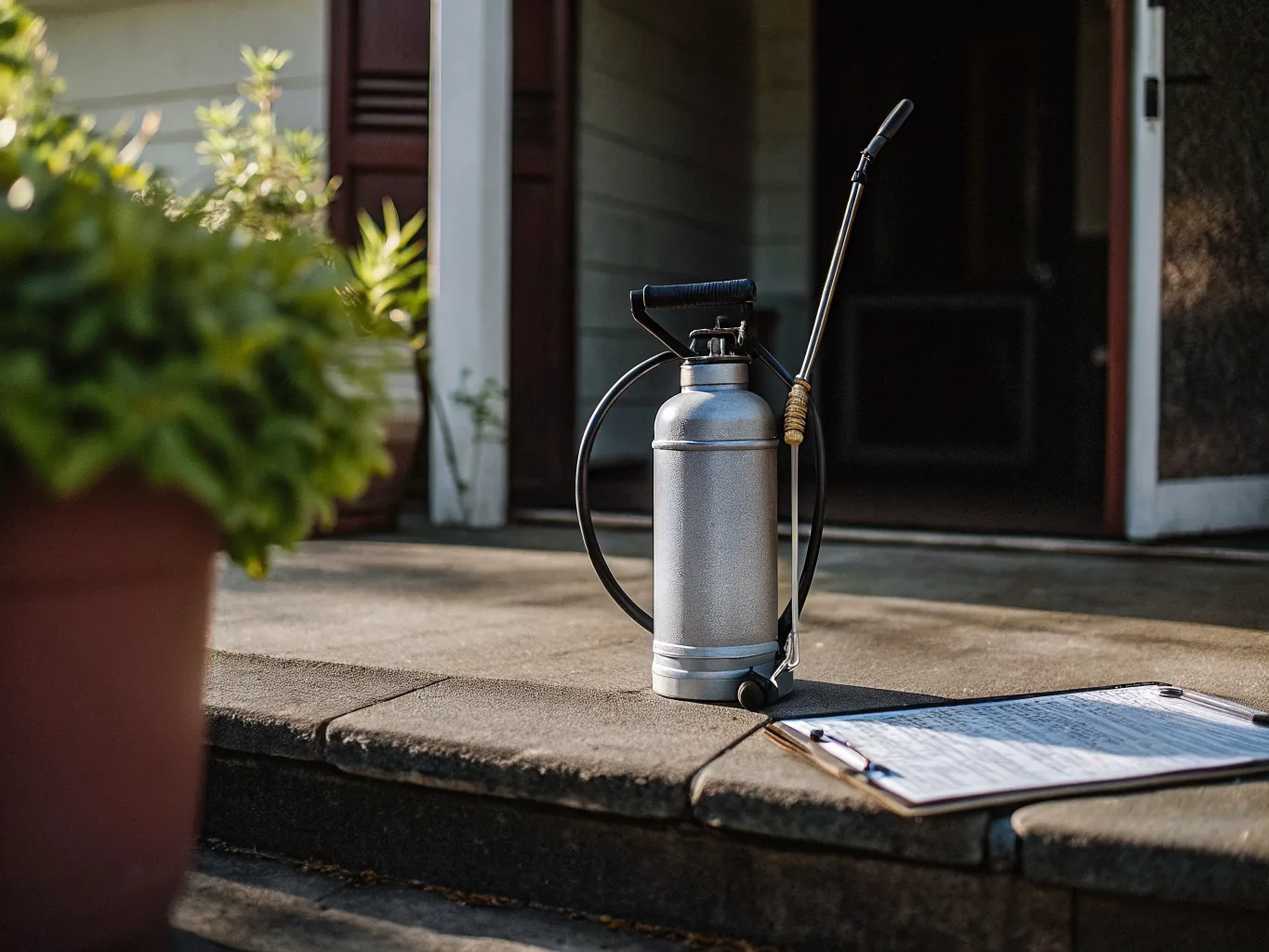
A pump sprayer runs about $15 and a bottle of bifenthrin concentrate about $30, and that combination does a perfectly competent perimeter treatment two or three times a season. Ants, spiders, the occasional earwig committee behind the garage: that is a Saturday morning, not a service call.
What we do not touch: termites, bedbugs, German cockroaches (which are a genuinely different problem than the big ones that wander in from outside), rodents in a wall, anything requiring a warranty for a sale, and wasps anywhere I would need a ladder. That last one is less about expertise than about the fact that I am not going up there.
Before You Sign the Clipboard
The technician standing on your porch is not the person who wrote the agreement, and he is usually happy to tell you what is actually in it if you ask directly. Four questions, before you sign:
- What is the auto-renewal date, and how many days of written notice do I need to give?
- If I cancel early, do I owe back any part of the initial service discount?
- Is re-service between visits unlimited and free, and does it cover every pest or only a listed set?
- If this is a termite bond, is it retreatment only or does it cover repair, and what is the cap?
Rob answered all four without hesitating, and we adjusted two of them before I signed. He also moved the mulch away from the siding, which turned out to be most of the actual fix. Ten minutes with a shovel, and the ants were a symptom of a landscaping decision rather than an infestation.
Ask what is causing it before you agree to treat it forever.
Ready to dig into the numbers? We have side-by-side breakdowns for every product mentioned in this article.