
The Terms-of-Service Clause That Says Your Prompts Are Theirs
Read it from the dispute backward. The question is not whether you own what you type into the chatbot. You do, on paper. The question is what license you handed the company in the same paragraph, and what it is allowed to do with your words the day it decides your words are useful.

Ownership Is the Wrong Question
Say a small firm runs its client intake through a consumer AI assistant. Names, case facts, a draft strategy, all typed into the box. Six months later the firm wants to know: who owns that text? The terms of service answer quickly and reassuringly. You do. You retain all right, title, and interest in your inputs. Delta Air Lines' AI terms say exactly that, and plenty of others echo it.
That sentence is designed to end the inquiry, and it should not. Ownership is not the operative clause. The license and privacy terms describe how a provider may use your text. Ownership alone does not answer whether a particular service uses prompts for training; check that product's terms and data controls. Read the agreement the way you would read it after the fight has started, from the dispute backward, and the license is where the fight actually is.
The License You Grant in the Same Breath
A common structure separates ownership from permission to use content. Some providers say you retain ownership while granting a license to operate or improve the service, but the scope and wording vary. Both clauses can be true at once. You hold the title; the company has only the permissions the agreement grants. Ownership without control of use is a deed to a house whose locks someone else changed.
A phrase such as "improve the service" can be broad, but it does not by itself prove that a provider trains on prompts. Check the specific product terms and privacy controls for training, retention, and deletion. If information is used in model training, removing the original conversation may not undo training that has already occurred.
Default On, Opt-Out Buried
The consumer tier is where this can bite hardest, because settings and terms vary. In 2025 Anthropic gave Free, Pro, and Max users a choice about whether new or resumed conversations could be used to improve future models. Training applies when the setting is on. Anthropic says opting in extends retention for those conversations to five years; if you do not opt in, its stated retention period is 30 days. Training and retention are separate terms to read.
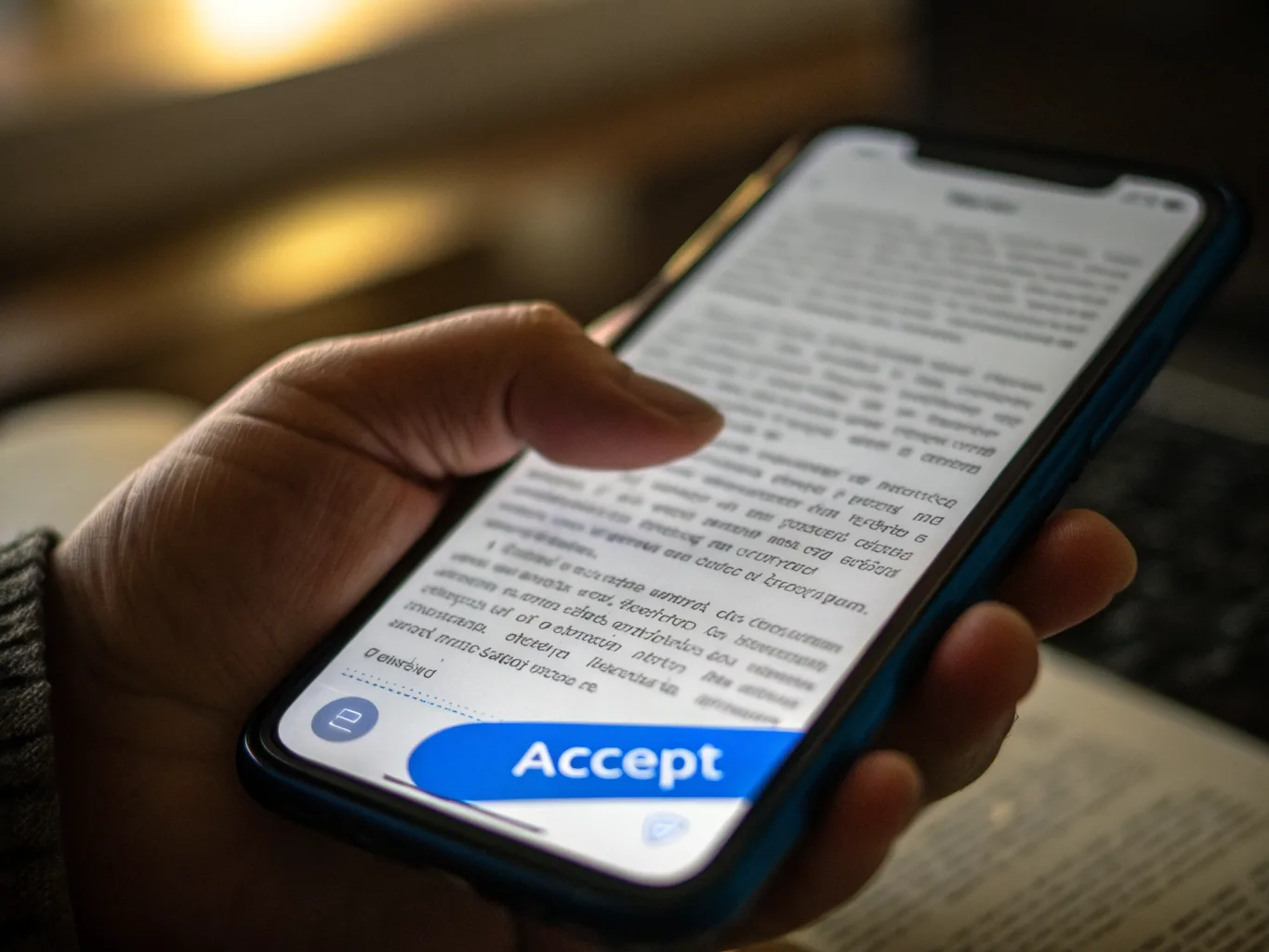
The mechanism that matters to a professional is the one that happens before any dispute: the moment a staffer pastes something confidential into the consumer version of a tool because it was open in another tab. At that instant, the product's license and data settings govern; check whether they permit training before pasting client information. The clause did not need to be hidden. It only needed to be boring enough that the person clicking accept was thinking about the deadline instead.
What the Business Tier Buys You
Some business plans state that customer data is not used to train models by default. That does not make all business terms interchangeable: retention periods, allowed processing, and license scope still vary by provider and product. The same company can offer different data terms across consumer and business plans, so read the terms for the exact account your team uses.
For anyone handling other people's confidential information, that distinction is the whole compliance question. The consumer tool and the business tool wear the same interface and carry opposite terms. Using the free version for client work is not a small convenience; it is a license grant over data that was never yours to license.
The Question to Ask Before You Paste
Read two clauses, not one. Find the sentence that says you own your content, then keep reading until you find the sentence that says what license you grant and for what purpose. If the terms or settings permit use for improving or training the service, then the practical answer is simple: that box is not a safe place for anything you would not hand to a stranger. A term you cannot explain to your client in one sentence is a term working against your client. Paste accordingly, or do not paste at all.