
Why Your Oil and Propane Delivery Is Going to Cost More This Winter
Retail heating oil was running near $4.76 a gallon in Pennsylvania in late August, against an EIA forecast of $3.50 a gallon just last winter. Crude oil is up sharply on a Middle East conflict that has cut Strait of Hormuz tanker traffic, and the roughly 5 million households that heat with oil and the millions more on propane are the ones who feel it first.

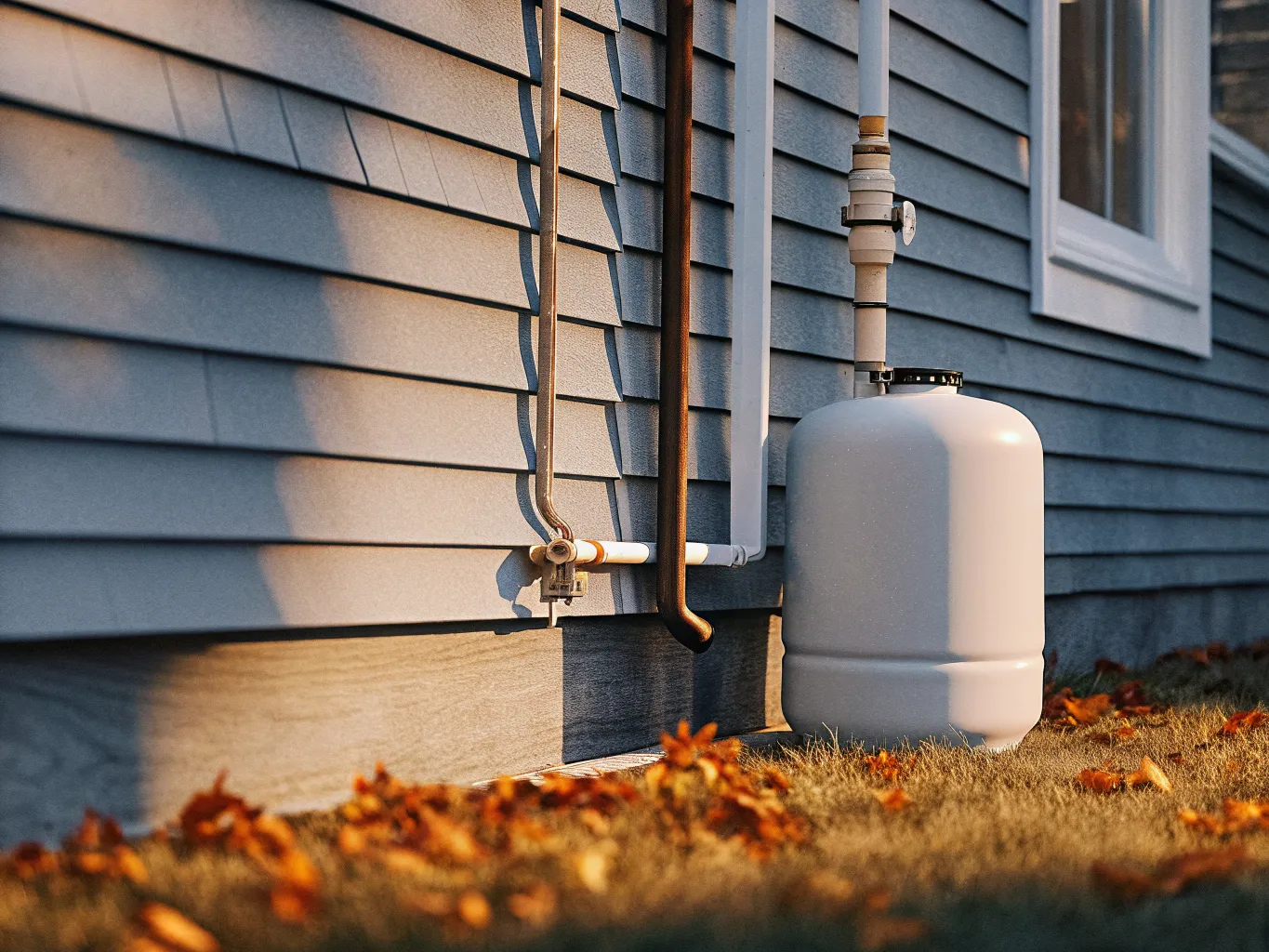
The Gauge on the Side of the Tank
Sometime in the next few weeks, you're going to walk out to the side of the house, wipe the dust off the little glass gauge on your oil tank or the dial on top of your propane tank, and do a small piece of mental math you didn't do last September. Where's the needle. How many weeks does that buy you. What did the last fill cost, and is it going to cost more this time. For most of the country that math doesn't exist, because most of the country heats with a gas line or a heat pump and never thinks about a delivery truck at all. But somewhere around 5 million households heat primarily with oil, and several million more heat with propane, and for that specific group, fall is when the guessing starts.
This fall, the guessing has a real answer, and it isn't a good one. Prices are up, by a lot, and the reason has nothing to do with anything happening in your basement.
Why the Delivery Invoice Looks Different This Year
Heating oil and propane are both made from crude oil and the natural gas that comes up alongside it, so when crude gets more expensive, everything downstream of it does too, with a lag of a few weeks while it works through the refining and distribution chain. And crude has gotten a lot more expensive in 2026. Brent crude was trading close to $90 a barrel in mid-August, up roughly 24 percent from where it stood before the US-Israel war with Iran began in late February. The mechanism is straightforward even if the politics aren't: the Strait of Hormuz carried around a fifth of the world's oil supply before the conflict, and attacks on shipping in the region have kept tanker traffic running well below normal since. The EIA doesn't expect Middle Eastern oil production to get back to anywhere near pre-conflict levels until early 2027, and its own working estimate has Brent averaging $87 a barrel for the year.
None of that is a household's problem to solve. It's just the water heating oil and propane prices are swimming in this year, and it's worth knowing the one sentence version so you're not left wondering whether it's your supplier, your usage, or something wrong with your equipment. It's none of those things. It's the barrel.
It's worth noting the two fuels aren't identical in how they get made, which is part of why they don't always move in exact lockstep. Heating oil is a direct crude distillate, so it tracks the price of crude fairly closely. Propane is mostly a byproduct of natural gas processing (with some coming from crude refining too), so it also answers to natural gas supply, which is why a mild winter forecast or a jump in export demand can nudge propane in a different direction than oil in a given month even while both are elevated against last year.
Last Winter's Numbers Against This Year's
Here's the before-and-after that actually matters to your budget. The EIA's Winter Fuels Outlook for last season, published in October 2025, forecast retail heating oil averaging $3.50 a gallon, with the typical household using about 400 gallons and spending around $1,390 for the whole winter. Propane was forecast at $2.46 a gallon, with a typical household spending about $1,210 for the season.
This year, spot and retail readings are already well above that. Pennsylvania's average retail heating oil price was $4.76 a gallon as of August 23. New Hampshire's current average is running around $5.02 a gallon. The commodity benchmark, No. 2 heating oil futures, was trading near $4.31 a gallon on August 24, up roughly 83 percent from the same week a year earlier, and it had already touched a record $4.60 during a volatile stretch back in March. Propane's wholesale marker at Mont Belvieu, Texas closed at $0.664 a gallon on August 7. Wholesale and retail aren't the same number (retail carries delivery, storage, and margin on top), but wholesale is the leading indicator, and it moves first.
The EIA's official Winter Fuels Outlook for the 2026-27 season won't publish until October, because the agency pauses its weekly residential price collection every April and doesn't resume it until the season starts. So there's no single official number yet for what this winter will average. What there is, instead, is a futures and retail market that has already priced in a war that hadn't happened when last winter's forecast was written, and every one of those numbers is higher than the ones households budgeted around a year ago.
The Households This Actually Hits
It's worth being specific about who "this" is, because it isn't most people. Heating oil is the primary heating fuel for roughly 5 million US households, and about 80 percent of them are clustered in nine states: New York, Pennsylvania, Massachusetts, Connecticut, New Hampshire, Rhode Island, Maine, Vermont, and New Jersey. If you're in that footprint and your house has an oil tank instead of a gas meter, you are, more or less by definition, in an older home in a cold-winter region, which is its own separate cost problem layered on top of the fuel price.
Propane households are a different map entirely. About 5 percent of US households, somewhere in the neighborhood of 6 million, heat primarily with propane, and they skew rural rather than regional, because propane goes wherever the gas line doesn't. A farmhouse in Ohio and a cabin in rural Georgia are both more likely to be on propane than a house two towns over that happens to sit on a gas main. Neither group has the option of just switching fuels before winter. That's a multi-thousand-dollar equipment swap, not a decision you make in September.
Locking In a Number Before the Snow Flies
The one piece of good news is that this industry has been dealing with volatile fuel prices for decades, and most dealers sell some version of price protection alongside the fuel itself. It's worth calling your supplier this month, not in November, because a few of these programs have hard enrollment cutoffs.
A price cap plan sets a ceiling on what you'll pay per gallon for the season. You're billed at the cap or the current market price, whichever is lower on the day of delivery, so you keep the benefit if prices happen to fall and you're protected if they don't. A pre-pay or fixed-price plan locks in one number for every gallon delivered all season, in exchange for paying some or all of it up front. Some suppliers are already running their 2026-27 programs with enrollment deadlines around the end of August and coverage windows that run from October 1 through the end of April, so if you've been meaning to call, the window is closing or already closed depending on your dealer. A budget or level-pay plan doesn't change your total cost at all; it just spreads your estimated annual fuel bill over roughly ten equal monthly payments, usually August through May, so a $1,600 winter doesn't land as three or four four-hundred-dollar hits in the coldest months.
These are three different tools for three different problems: the cap plan manages price risk, the pre-pay plan manages it more aggressively in exchange for cash up front, and the budget plan just manages cash flow. None of them make the gallon cheaper on average. They change when and how unevenly you feel it.
Read the terms before you sign anything, particularly on a pre-pay plan, since a few charge a small per-gallon premium over the market price at the time you lock, which is the cost of the certainty. And if you're an oil customer, it's worth actually shopping the delivery price between two or three local dealers before committing to a season-long plan with whichever one you've always used out of habit. Oil is a genuinely competitive local market in most of the Northeast. Propane is a little different, because most suppliers lease you the tank itself, and switching companies can mean paying to have a tank pulled and a new one set, so the leverage runs the other way and it's worth asking your existing supplier directly whether their price is their best offer before you assume it is.
What a Fill Actually Costs This Year
Run the numbers on an actual tank and the increase stops being abstract. A standard residential oil tank holds 275 gallons. At Pennsylvania's current $4.76 a gallon, a full fill runs about $1,309. At New Hampshire's $5.02, it's closer to $1,380. Compare that to what a similar fill would have cost against last winter's forecast average of $3.50 a gallon, about $963, and you're looking at roughly $350 to $400 more per fill, before you've used a single gallon of it.
Propane tanks work differently because of a safety rule most people never think about: delivery drivers only fill an aboveground tank to 80 percent of its capacity, never full, so there's room for the liquid propane to expand as temperatures rise without pressure building past what the tank's relief valve is rated for. It's in the National Fire Protection Association's LP-gas code, not a supplier being stingy. A common 500-gallon residential tank, filled to that 80 percent line, is actually taking on 400 gallons. At even modest gains over last winter's $2.46 average, that fill is running noticeably higher than households paid a year ago, and most suppliers will tell you to schedule the next delivery once the gauge reaches 20 percent, not when it's empty.
The Fixes That Actually Move the Number
None of this is a reason to just absorb a bigger bill without doing anything on your end, because the fuel price is the one variable you can't control and the consumption is the one you can.
The Department of Energy's standing estimate is that you save about 1 percent on your heating bill for every degree you set the thermostat back for eight hours or more, which means a 7 to 10 degree setback overnight or while the house is empty during the day can save up to 10 percent over a season. That's real money on a $1,600 bill, and it costs nothing beyond the discipline of programming a thermostat and leaving it alone. An oil burner or propane furnace that hasn't had its annual tune-up is also worth the service call before the season starts; a technician cleaning the nozzle, checking the draft, and confirming the burn is efficient catches the kind of waste you'd otherwise just be paying for all winter without knowing it. If your system uses radiators, bleeding trapped air out of them so they heat evenly (instead of running longer to compensate for cold spots) is a five-minute job with a radiator key that a surprising number of homeowners have never done. And if you've read my piece on the devices quietly drawing power while they're off, the same instinct applies here: sealing the obvious drafts around doors, attic hatches, and old windows keeps the heat you already paid for inside the house instead of leaking it back out to the yard.
When to Actually Call for the Fill
There's a temptation, in a year when the price per gallon stings, to try to ride the tank as low as possible and hope for a dip. Resist it. On heating oil specifically, letting the tank drop much past a quarter full risks stirring up the sediment and condensation water that settle at the bottom of every tank over time, which can clog a fuel filter at the worst possible moment. Run it fully dry and you'll introduce air into the fuel line, which means the burner won't restart on its own; it needs to be bled by hand, and if that happens during a cold snap when every technician in a five-county radius is booked solid, you could be without heat for longer than the money you were trying to save is worth. Propane suppliers set the same 20 percent reorder line for a related reason: a nearly empty tank can lose enough pressure in cold weather that appliances stop running properly even before the tank is technically out.
The practical version of all of this is boring, which is usually how the good financial advice turns out: call your supplier this month rather than waiting for the first cold snap to make the decision for you, ask specifically what price protection they're still offering and by what deadline, and treat the quarter-tank and 20-percent marks as the point you order, not the point you start thinking about it.